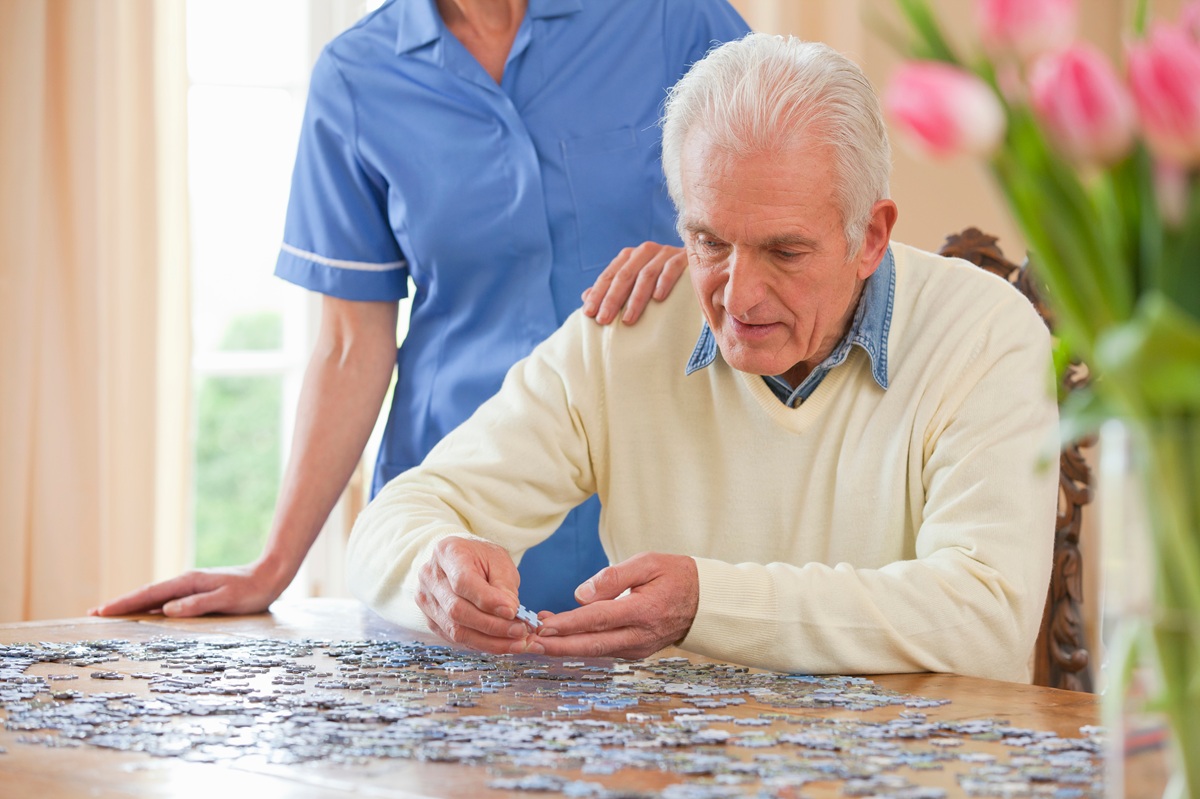
At Vineyard Ranch in Temecula, we recognize the important role a memory care caregiver plays in the lives of individuals with memory impairment. For them, these caregivers are like a second family. By going beyond basic caregiving responsibilities, they help residents maintain a good quality of life while feeling supported and at home.
Trained memory care specialists support seniors by using evidence-based techniques to manage behavioral challenges, structure daily routines, and slow cognitive decline. With specialized training, they provide residents with person-centered care that preserves residents’ dignity and autonomy while supporting them in maintaining a higher quality of life.
By intentionally supporting residents’ overall well-being, the trained caregivers help residents feel valued, seen, and respected. Here’s a blog post on how trained memory care staff supports seniors.
Validation And Redirection
Dementia affects a person’s understanding of reality. They may believe things that are factually incorrect or distressing. It might be because of a past traumatic event or the loss of a loved one that causes them to view reality differently from what’s actually true. This leads them to make incorrect assumptions and statements about themselves and their lives. They may begin to feel anxious and stressed without an obvious reason.
Correcting individuals with dementia in situations like these can cause them to become irritated or confused. What they need in moments like these is gentle orientation and strategic validation. Specialized memory caregivers do exactly this: instead of correcting factual errors, they acknowledge the emotional reality behind confused statements and misunderstandings. They work to gently guide their attention toward pleasant memories or stimulating activities to reduce distress.
De-Escalation And Behavior Management
Another common challenge of individuals with dementia is exhibiting behavioral problems. Without an obvious reason, they might display challenging behaviors like anxiety, aggression, agitation, or even wandering. But at times, they might also display these challenging behaviors in response to certain triggers. Managing these difficult behaviors requires specialized training and expertise, which memory care staff possess.
Memory care caregivers are trained to interpret non-verbal cues and understand the specific triggers that lead to anxiety, wandering, or aggression. Rather than jumping to a quick solution, they identify the root cause of the distress. They aren’t just trained in theory; they receive real-world scenario training to ensure they can deliver compassionate care based on what is best in the moment. The staff employs gentle redirection, offers empathetic validation, and makes appropriate environmental modifications.
Structured Daily Routines
Another concern among individuals with memory impairment is the challenge of finding a sense of familiarity and building a daily structure. This happens because dementia can affect crucial brain functions such as sequencing, planning, attention, and memory. As a result, they even struggle to remember how to perform familiar tasks, process complex instructions, and even lose the motivation to complete basic daily activities.
To support this, trained memory caregivers introduce structured daily routines to provide residents with a sense of familiarity, predictability, and emotional security. They introduce routines anchored in consistent patterns, including set times for meals, personal hygiene, and activities. Having a consistent routine helps residents reduce cognitive load, minimize anxiety, and manage behavioral symptoms like sundowning. The staff focuses on personalizing and sequencing these daily routines to ensure that residents can follow them more easily.
Assistance With ADLs
Dementia’s progression also makes it challenging for an individual to complete even the most basic activities of daily living (ADLs). As the disease progresses, they may find it difficult to complete even tasks such as eating, bathing, dressing, and managing medications. Trained caregivers assist residents with Activities of Daily Living (ADLs)—like bathing, dressing, and eating. They break tasks into manageable steps, using hand-under-hand guidance to preserve independence, and apply de-escalation techniques to minimize fear and resistance.
Instead of forcing a task, trained caregivers recognize the physical or emotional triggers behind the person’s resistance to care. They address physiological obstacles to ADLs, such as simplifying environments to reduce visual overstimulation, modifying dental equipment, and handling “sundowning” confusion during evening routines. In addition to assisting them with activities of daily living (ADLs), staff handle laundry and linens and provide housekeeping services.
Cognitive And Social Stimulation
Another fundamental need for residents in memory care is cognitive and social stimulation. As dementia progresses, so does the rate of cognitive decline. Moreover, they may need social support that helps them feel valued and connected. Memory care caregivers are trained to support this as well. They use strategic cognitive stimulation techniques such as structured reminiscence, multisensory activities, adaptive brain games, and more. Their focus is on helping residents process information rather than forcing a strict factual recall.
For social stimulation, they use mental exercises in social settings to foster a socially engaging group environment. Hosting music-related activities, singing familiar songs, and playing simple physical games helps them build community and connection. The staff even helps residents stay connected to their environment and peers by discussing their daily routine, weather, or recent shared events.
Vineyard Ranch At Temecula – A Memory Care Community That Promotes Whole-Person Wellness
At Vineyard Ranch at Temecula, we understand the important role memory care staff play in residents’ lives. Based on their specialized training and experience, they offer reliable, tailored support to residents, helping them feel supported and thrive. In addition to assisting residents, the staff educates families on how to address the challenges they may face due to their loved one’s condition. By providing empathetic care, trained caregivers support residents in maintaining a good quality of life full of vitality and engagement.
Those seeking a reliable memory care community for their loved one can contact us at Vineyard Ranch at Temecula. Guided by a commitment to comprehensive care, we empower residents to live with purpose. In addition to basic care, we focus on delivering a personalized lifestyle tailored to each resident. With amenities such as a courtyard, dining rooms, a Snoezelen room, and a gazebo, we support an enriching lifestyle for residents. Based on your lifestyle and care needs, you can choose from any of our five floor plans. To get a firsthand look at our community, you can schedule a tour today.